




We may not have the course you’re looking for. If you enquire or give us a call on +44 1344 203 999 and speak to our training experts, we may still be able to help with your training requirements.
Google Software Engineer Levels & Salary
ByThe Knowledge AcademyLast updated on: 11 September 2026
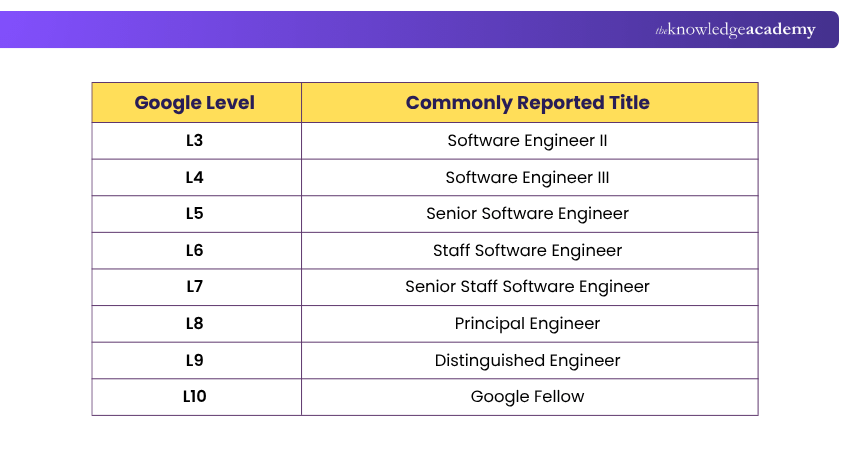
Google software engineer levels typically progress from L3 Software Engineer II through increasingly senior technical roles such as Senior, Staff, Principal, Distinguished Engineer, and Google Fellow. Understanding these levels can help clarify responsibilities, expectations, and career progression at Google.

What This Blog Covers
1. Google Software Engineering levels from L3 to L102. Responsibilities and expectations at each level3. Software Engineer salaries across different countries4. Factors that can influence Google level placement
A Software Engineer's responsibilities at Google can vary considerably by level. Early-career engineers may focus on clearly scoped development tasks, while senior engineers can influence architecture, technical strategy, and work across multiple teams.
Understanding Google Software Engineer Levels can help professionals compare responsibilities, career expectations, compensation, and progression. This blog explains the commonly reported hierarchy and the factors that can influence level placement
What are the Different Google Software Engineer Levels?
Google uses a structured engineering hierarchy in which responsibilities generally increase with technical scope, independence, leadership and organisational impact. Google does not publish a complete public L3-to-L10 level matrix on its Careers site. However, current job titles and commonly reported level mappings indicate the following progression. Let's explore the commonly reported Software Engineering levels at Google:
Level Up Check
Which change best signals movement towards a higher Software Engineering level?A) Writing more lines of codeB) Spending more years in the same roleC) Taking ownership of broader and more complex technical problemsAnswer: C. Higher levels generally reflect increasing scope and impact, not simply time served or coding volume.
L3: Software Engineer II
Software Engineer II is commonly associated with the early stage of Google's full-time Software Engineering hierarchy. Engineers at this level generally work on clearly scoped development tasks while building deeper knowledge of Google's systems, tools and engineering practices.
Typical responsibilities can include:
1) Writing and maintaining production code
2) Debugging software issues
3) Implementing well-defined features
4) Participating in testing and code reviews
5) Collaborating with more experienced engineers
6) Developing technical knowledge within the assigned area
Current Google Software Engineer II postings are classified as Early career roles. Some require around one year of software-development experience, alongside a relevant degree or equivalent practical experience. Requirements vary by role and specialisation.

L4: Software Engineer III
Software Engineer III represents a step towards greater independence and technical ownership. Engineers at this level are generally expected to solve more complex problems and contribute more actively to design decisions.
Typical responsibilities can include:
1) Developing and maintaining larger software components
2) Solving moderately complex technical problems
3) Contributing to system and component design
4) Reviewing code and supporting quality improvements
5) Owning defined areas of work more independently
6) Supporting less experienced team members where appropriate
Current Google Software Engineer III postings are classified as Mid career roles and commonly request around two years of software-development experience, although requirements vary.
L5: Senior Software Engineer
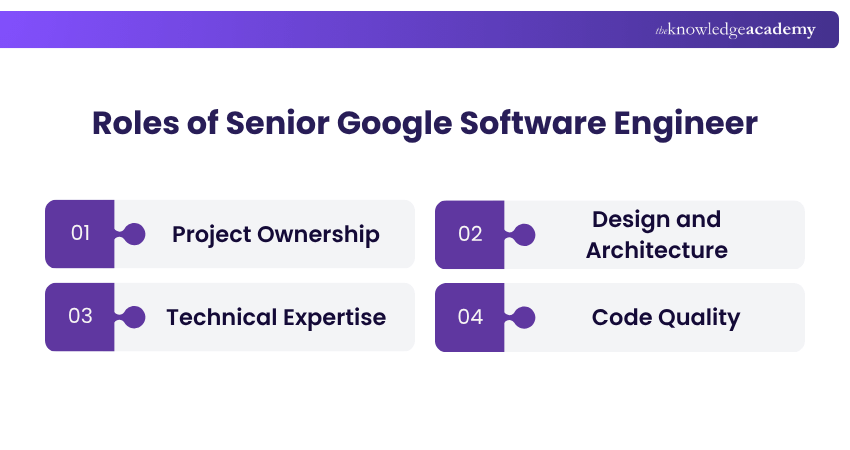
Senior Software Engineers take greater ownership of technical problems and projects. Their work can extend beyond individual coding tasks into design, architecture, mentoring and coordination.
Typical responsibilities may include:
1) Owning significant software components or projects
2) Making important technical design decisions
3) Reviewing and improving system architecture
4) Mentoring other engineers
5) Coordinating work across technical stakeholders
6) Improving reliability, quality and maintainability
Many current Google Senior Software Engineer postings request around five years of software-development experience, along with experience in software design, testing or launching products.
L6: Staff Software Engineer
Staff Software Engineers typically operate across broader technical areas rather than focusing only on one project or component. They may influence architecture, technical standards and engineering direction across multiple teams.
Typical responsibilities can include:
1) Leading technically complex initiatives
2) Setting technical direction for major systems
3) Influencing architectural decisions
4) Solving ambiguous and large-scale engineering problems
5) Mentoring senior and junior engineers
6) Coordinating technical work across teams
Current Staff Software Engineer postings commonly ask for substantial development experience, with some roles requesting around eight years alongside architecture and technical-leadership experience.
Strengthen your software development knowledge with our Software Development Lifecycle Training – Join now!
L7: Senior Staff Software Engineer
Senior Staff Software Engineers operate at a broader level of technical influence. They may shape major engineering initiatives, solve highly ambiguous problems and influence decisions across large areas of the organisation.
Typical responsibilities can include:
1) Defining technical direction across significant systems
2) Leading high-impact engineering initiatives
3) Influencing architecture across multiple teams
4) Solving complex and ambiguous technical problems
5) Guiding technical leaders and engineers
6) Aligning engineering decisions with wider organisational priorities
Current Google Senior Staff postings classify the role as Advanced and may require extensive software-development and architecture experience, with technical leadership expectations varying by role.
L8: Principal Engineer
Principal Engineer is an exceptionally senior individual-contributor role associated with organisation-scale technical influence.
Engineers at this level may:
1) Shape long-term technical strategy
2) Influence major architectural decisions
3) Lead highly complex cross-organisational initiatives
4) Resolve critical technical challenges
5) Establish engineering standards and direction
6) Influence product and technology decisions at a broad level
The exact scope varies considerably according to the organisation, technical domain and role.
L9: Distinguished Engineer
Distinguished Engineer is commonly reported as one of the highest technical individual-contributor levels at Google. Engineers at this level can have broad influence across major technical areas, shaping architecture, engineering strategy and long-term technology direction.
Typical responsibilities can include:
1) Defining technical strategy across large parts of the organisation
2) Influencing architecture for highly complex systems
3) Leading major cross-organisational technical initiatives
4) Solving highly complex and ambiguous engineering problems
5) Guiding senior technical leaders and engineering teams
6) Establishing engineering practices and technical direction at a broad scale
The exact scope of a Distinguished Engineer role can vary considerably depending on the technical domain and organisational needs.
L10: Google Fellow
Google Fellow is commonly reported as an exceptionally senior technical level associated with extensive organisational and industry-level influence. Professionals at this level may shape long-term technology strategy and contribute to some of Google's most significant technical decisions.
Typical responsibilities may include:
1) Shaping long-term technical vision across major areas of Google
2) Influencing company-wide architecture and engineering strategy
3) Leading work on exceptionally complex technical challenges
4) Distinguished Engineers and other senior technical leaders
5) Establishing new technical directions and engineering standards
6) Contributing to technology decisions with broad organisational impact
Google Fellow positions are rare, and Google does not publish a standard public set of experience requirements for this level. External level mappings commonly identify L10 with the Google Fellow title.
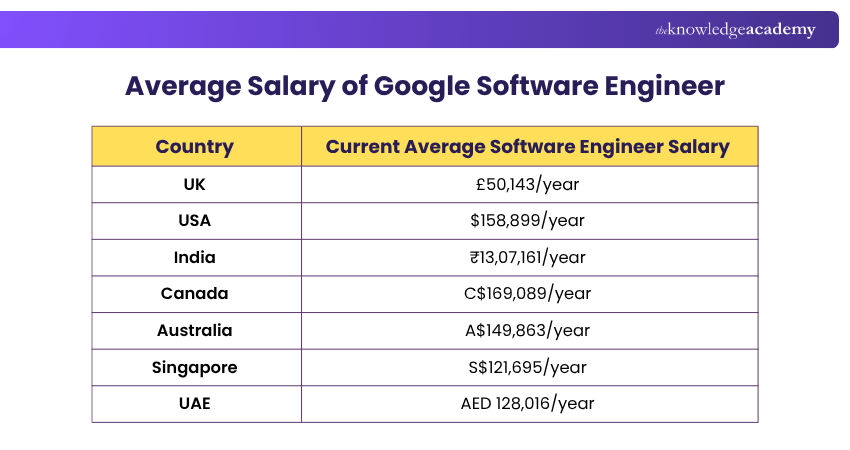
Average Software Engineer Salaries in Different Countries
Google Software Engineer compensation can vary substantially according to country, engineering level, experience and the mix of base salary, stock and bonus. When comparing locations, use total compensation and base salary separately rather than treating all reported figures as equivalent. Let's explore the salary of Google Software Engineer Levels in different countries:
Factors Affecting Google Software Engineer Levels
Google level placement can depend on more than years of experience alone. Technical scope, previous impact, interview performance, and the requirements of the specific role can all influence how a candidate is evaluated. The following factors are particularly relevant:
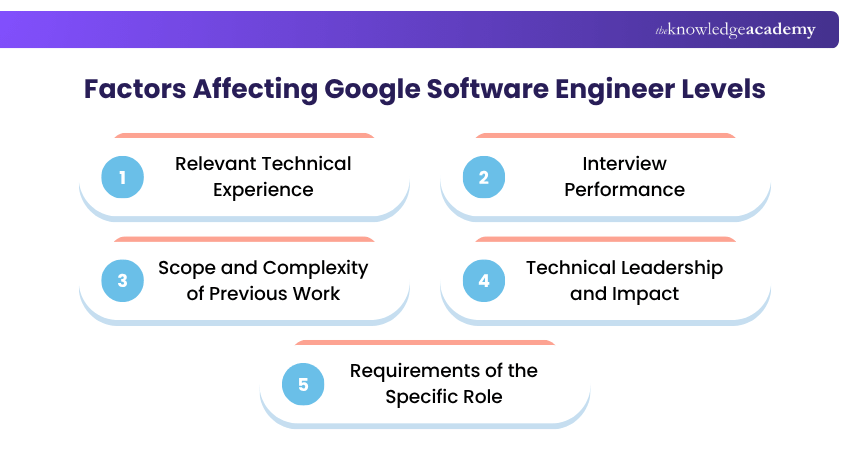
1) Relevant Technical Experience: Google considers whether a candidate's previous technical work matches the scope and complexity expected for the role. The number of years required varies according to the position.
2) Interview Performance: Candidates may be assessed across areas such as coding, algorithms, problem-solving, system design and role-specific technical knowledge, depending on the position.
3) Scope and Complexity of Previous Work: Experience owning complex systems, solving ambiguous problems or handling larger technical responsibilities can indicate readiness for more senior roles.
4) Technical Leadership and Impact: At senior levels, Google roles increasingly emphasise technical direction, mentoring, architecture, decision-making and influence across teams.
5) Requirements of the Specific Role: Not every Software Engineering position at the same broad level has identical requirements. Specialisations such as AI/ML, Cloud, infrastructure, security or distributed systems can require additional domain expertise.
Pro Tip: Do not judge your readiness for a higher Google level by years of experience alone. Compare the scope, ownership, technical complexity, and impact of your work with the expectations of the target role.
Google Software Engineer levels generally reflect increasing technical scope, ownership, and organisational influence. Progression can depend on experience, interview performance, technical impact, and role requirements, while compensation varies by level and location.
Learn how to implement a change management plan and release management with Google Cloud Developer Certification – Join now!

The Knowledge Academy is a world-leading provider of professional training courses, offering globally recognised qualifications across a wide range of subjects. With expert trainers, up-to-date course material, and flexible learning options, we aim to empower professionals and organisations to achieve their goals through continuous learning.


 If you wish to make any changes to your course, please


